
Why Most Businesses Hire the Wrong Brand Designer (And How to Get It Right)
How to Find the Right Brand Designer for Your Business
Most business owners who've been burned by a bad branding experience say the same thing when I ask them what went wrong: they just started designing.
No questions. No discovery. No real understanding of the business, the audience, or what the brand actually needed to do. Just straight to Canva, or Illustrator, or wherever, and a logo landed in their inbox two weeks later that looked fine but could have belonged to literally any business on the planet.
That's not brand design. That's decoration. Expensive decoration, usually.
If you're trying to find the right brand designer for your business, this post will give you an honest, experience-based guide to doing it properly. No generic checklist. Just the stuff that actually matters, from someone who's seen what happens when it goes wrong.
First, Understand What You're Actually Buying
This is where most people go wrong before they've even started looking.
A graphic designer is someone who creates visuals. They might be exceptional at typography, layout, illustration, or logo craft. Genuinely brilliant people exist in this space. But graphic design is fundamentally a production discipline, the execution of visual communication. Someone has to tell them what to make and why. That someone needs to be a brand designer.
A brand designer is a specialist. They understand that a brand is not a logo. It's the sum of how a business is perceived, by its audience, in its market, against its competitors. A brand designer uses strategy to drive every design decision. Their core value is in their thinking, not just their making.
Hiring a graphic designer to build your brand is like hiring a skilled builder to design your house. They can execute brilliantly, but without an architect you might end up with something that looks fine but doesn't quite work. And you won't always be able to put your finger on why. When you're investing in your brand, you need the architect.
The Biggest Mistake Founders Make When Hiring
When a new client comes to me having already gone through a bad branding experience, the story is almost always the same. They found someone online, liked their portfolio, had a brief call, and work began almost immediately. No discovery. No research. No strategy. Just vibes and a mood board.
The designer didn't ask about the business goals, the target audience, the competitive landscape, or the founder's vision. They didn't try to understand the real problem. They just made things look nice and hoped for the best.
Here's the truth: before any design work begins, you need foundations. Discovery, research, and strategy aren't extras or add-ons, they are the work. The design that comes out the other side is only as strong as the thinking that precedes it. Skip this part and you're essentially paying someone to guess.
I experienced this firsthand on a recent project with Bucknall Whitehouse Ltd, a newly established accountancy firm in Derbyshire. The founder came with a clear vision, a practice built on traditional values, long-term relationships, and genuine professional standards. Good foundations to build from. But vision alone doesn't build a brand.
Before a single design decision was made, I spent time understanding the business properly. I researched the competitive landscape across Derbyshire and South West Sheffield. What I found was pretty telling. Most local accountancy firms fell into one of two camps: overly corporate, or dated and generic. Nearly all of them used the same safe, forgettable language. Trusted advice. Friendly service. Here to help. Words that mean nothing because everyone says them.
I dug into the founder's background, his family heritage, and the values that drove him to start the firm in the first place. I built audience personas. I mapped out positioning. Only once all of that was done did the creative direction begin to take shape, a brand identity rooted in heritage and quiet confidence, modern in its execution, grounded in place and character.
The result was a brand that actually meant something. Not just visually, but strategically. Every colour choice, typography decision, and tone of voice guideline traced directly back to the foundations we'd built together. That's what happens when discovery comes first. That's the difference.
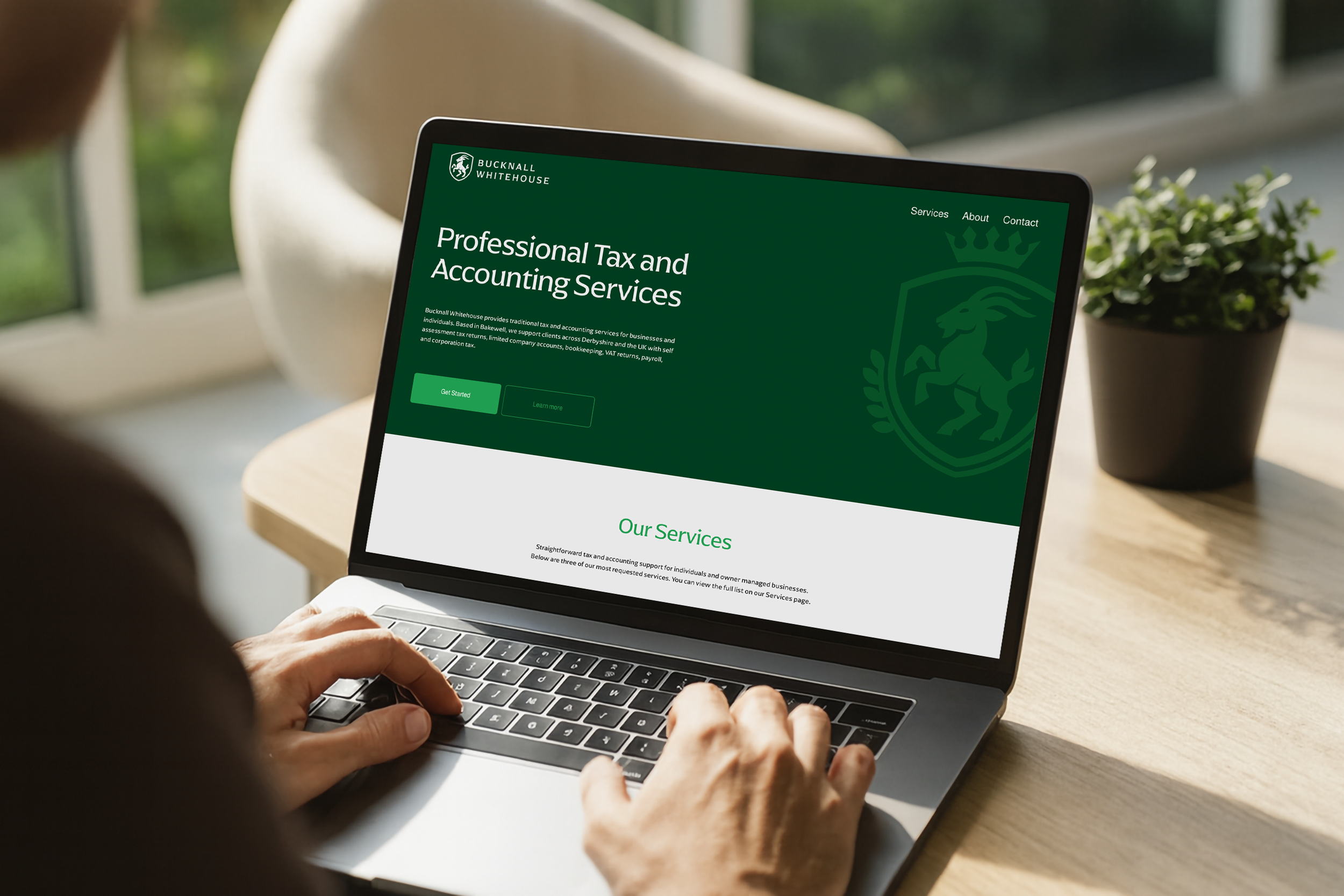
Bucknall Whitehouse Webpage Mockup
Why Most Clients Can't Vet a Brand Designer on Their Own
Here's something most people in the industry won't say out loud: most clients don't know enough about brand design to ask the right questions. That's not a criticism, it's just the reality. Brand strategy is a specialist discipline. If you haven't spent years working in it, you won't naturally know what to look for, what to ask, or what a red flag even looks like.
So yes, there are questions worth asking any designer you're considering. How will this help my business? What does your process look like? How do you make sure the brand truly represents my business? What will I actually receive at the end? Can you explain the thinking behind your work?
These are good questions. But here's the thing: the best brand designers don't wait for you to ask them.
A strong brand designer leads the conversation. From the very first call, they're already guiding you toward the things that matter, your business goals, how you want your audience to perceive you, where you sit in your market, how your brand needs to perform over the long term. When that happens, you'll notice something shift in the conversation. You'll stop feeling like you're interviewing a vendor and start feeling like you're talking to someone who genuinely gets your business. That feeling matters. Trust it.
If a designer's first response to your brief is to talk about what they'll make rather than what they need to understand first, that tells you everything.
What a Proper Brand Design Process Actually Looks Like
A serious brand design engagement starts with real discovery. A proper conversation about your business, your goals, your values, the problems you solve, how you want to be perceived, and what success actually looks like. This isn't a form to fill in. It's a dialogue, and it should feel like one.
It should involve research. An honest look at your market and competitors. Who else is operating in your space? How do they present themselves? Where are the gaps? What does your audience respond to? This is where a lot of designers skip to the fun part. Don't let them.
Before anything is designed, there should be a clear strategic foundation. Brand purpose, positioning, personality, voice, and messaging direction. This is the document that makes every design decision defensible rather than just a matter of personal taste. A visual direction, moodboards, typography, colour, should flow directly from that strategy, not from whatever the designer happens to like that week.
Only then does the actual identity design begin. And because it's built on everything above, there is a reason for every choice. Delivery shouldn't just be a folder of files either. A brand designer should hand over something you can actually use, guidelines, rationale, and a clear understanding of how the brand should be applied going forward.
If any of those stages are missing, particularly the first three, the end result will reflect it. Every time.
The Kind of Business This Works Best For
I'll be straight with you about who I do my best work with, because I think it's worth saying honestly.
The clients I work best with are growing businesses run by ambitious founders. People with big ideas who want to stand out and understand that building something properly takes real investment. They're good people who've worked hard to get where they are. They know what they're great at and they're confident enough to trust an expert in the areas where they're not. They don't want average. They want a brand that reflects the business they're building, not the one they started as.
The engagements that don't work out are almost always the same story. People who treat brand design like a commodity, who question every decision, micromanage every detail, and want the premium outcome at the budget end of the market. It doesn't work. Not because of ego, but because great brand work requires trust, and trust has to go both ways.
If you're looking for the cheapest option, there are plenty of places to find it. But if you want a brand that genuinely works, that positions your business clearly, earns trust from the right people, and holds up over time, you need to treat it as the investment it is.
A Simple Test Before You Hire Anyone
Before you commit to working with a brand designer, ask them one question: before we talk about what you'll design, what do you need to understand about my business?
The answer will tell you everything. If they pivot straight to process, timelines, and deliverables, you're talking to someone who leads with execution. Fine for some things. Not for this.
If they start asking about your goals, your audience, your competitors, and what success actually looks like for you, you're talking to someone who leads with strategy.
That's the person you want.
Sources
- [Medium: 8 Red Flags to Avoid When Hiring a Designer](https://medium.com/design-bootcamp/8-disguised-red-flags-to-look-out-for-when-hiring-graphic-designers-950b59bdcb03) — on warning signs that someone isn't the right fit, including process, pricing and portfolio quality.
- [Contra: How to Evaluate a Freelance Web Designer's Portfolio](https://contra.com/p/REYcWrMs-how-to-evaluate-a-freelance-web-designers-portfolio-and-spot-red-flags) — on what to actually look for in a portfolio before hiring.
